Buyer guide
Sun Belt Work Vans: Ram ProMaster vs ProMaster City
Choosing between Ram's full-size ProMaster and the returning ProMaster City for a small Southern business, with sizes, loads, prices, heat and power questions.
By the South CDJR editors · Updated November 6, 2026 · 6 min read
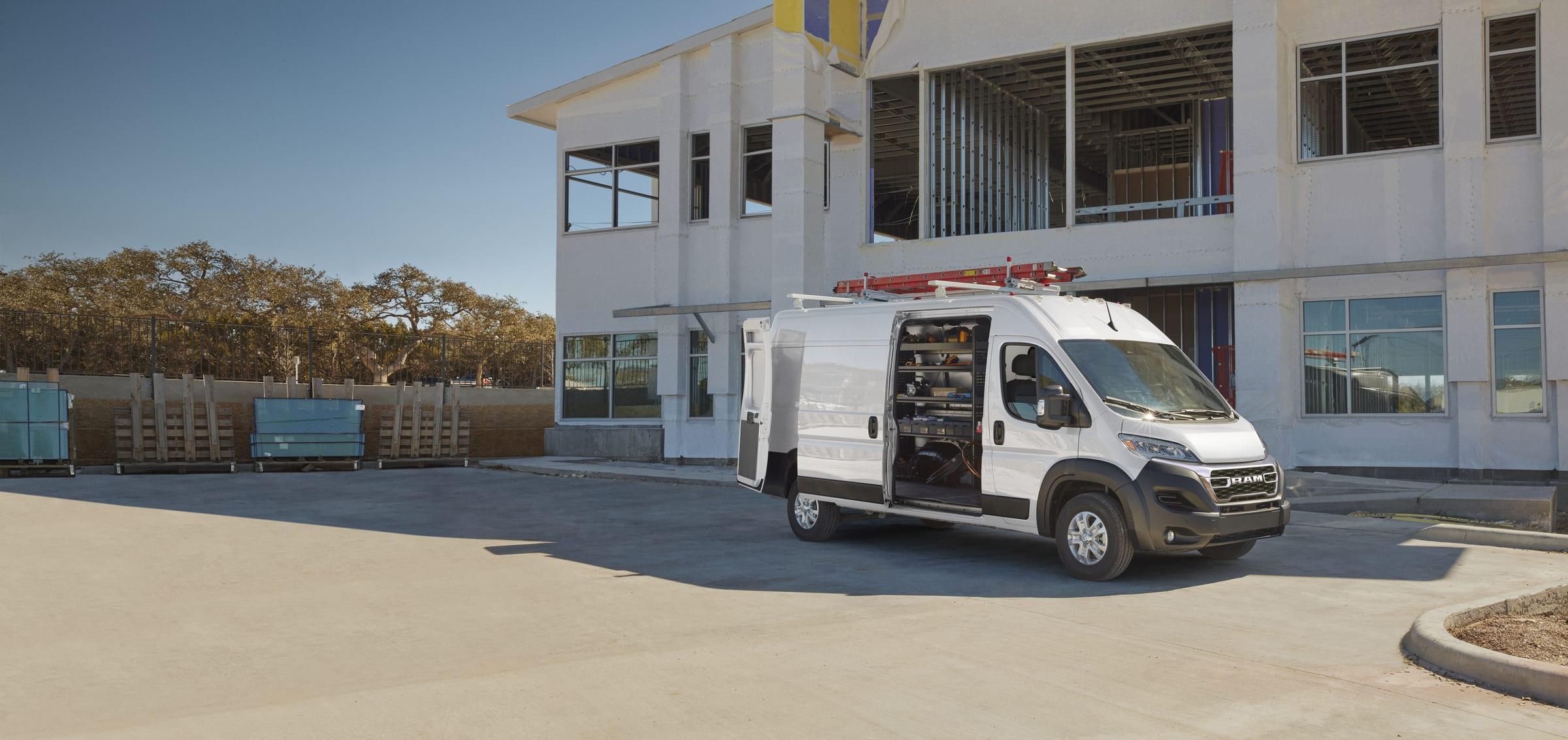
A small business in Houston, Dallas or Albuquerque asks a van to do three jobs at once: carry the work, survive a parking lot in August, and stay cheap enough that one bad quarter does not sink the purchase. Ram sells two vans that sit on opposite sides of that trade-off, and for 2027 they are far apart in size, price and arrival date.
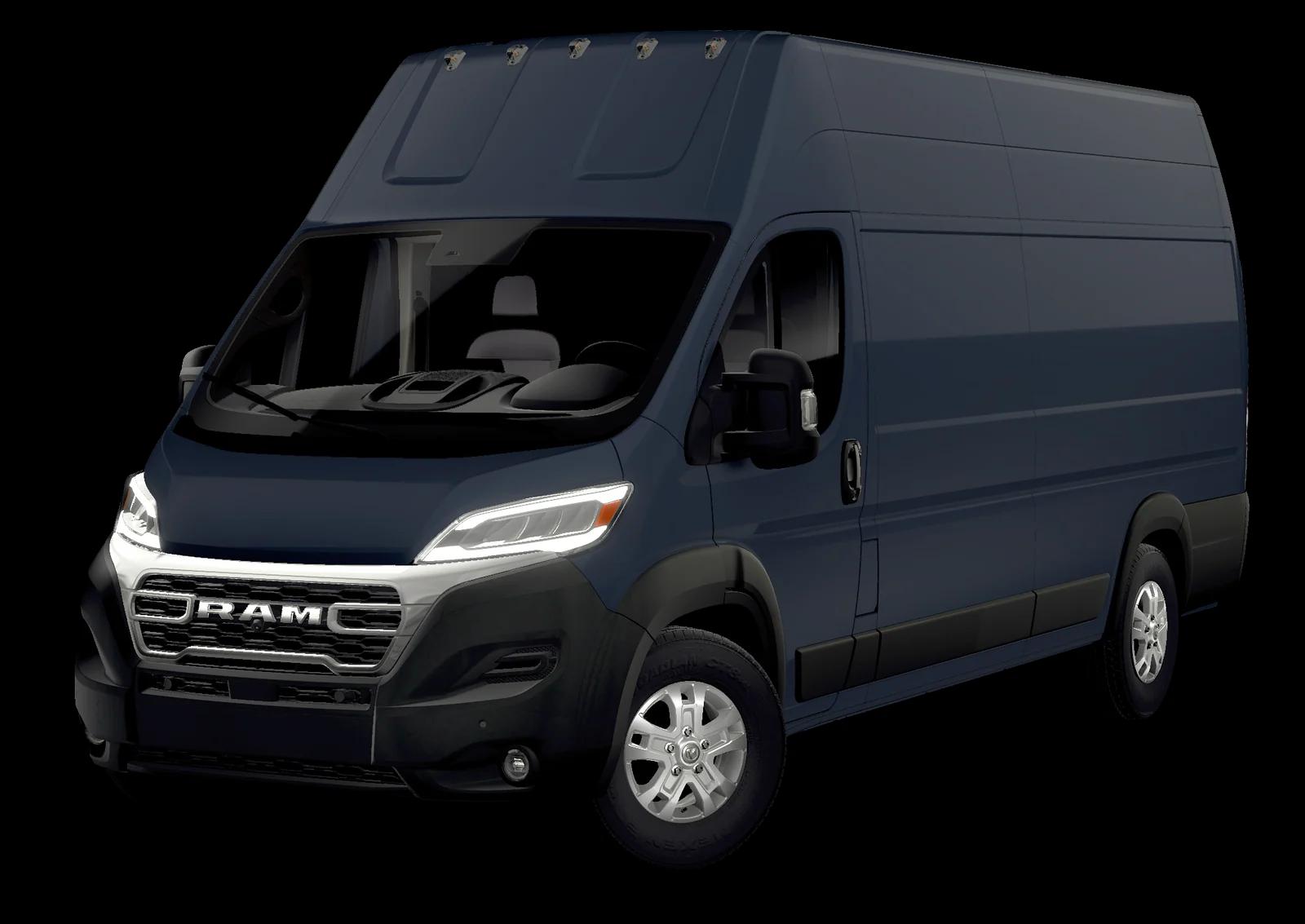
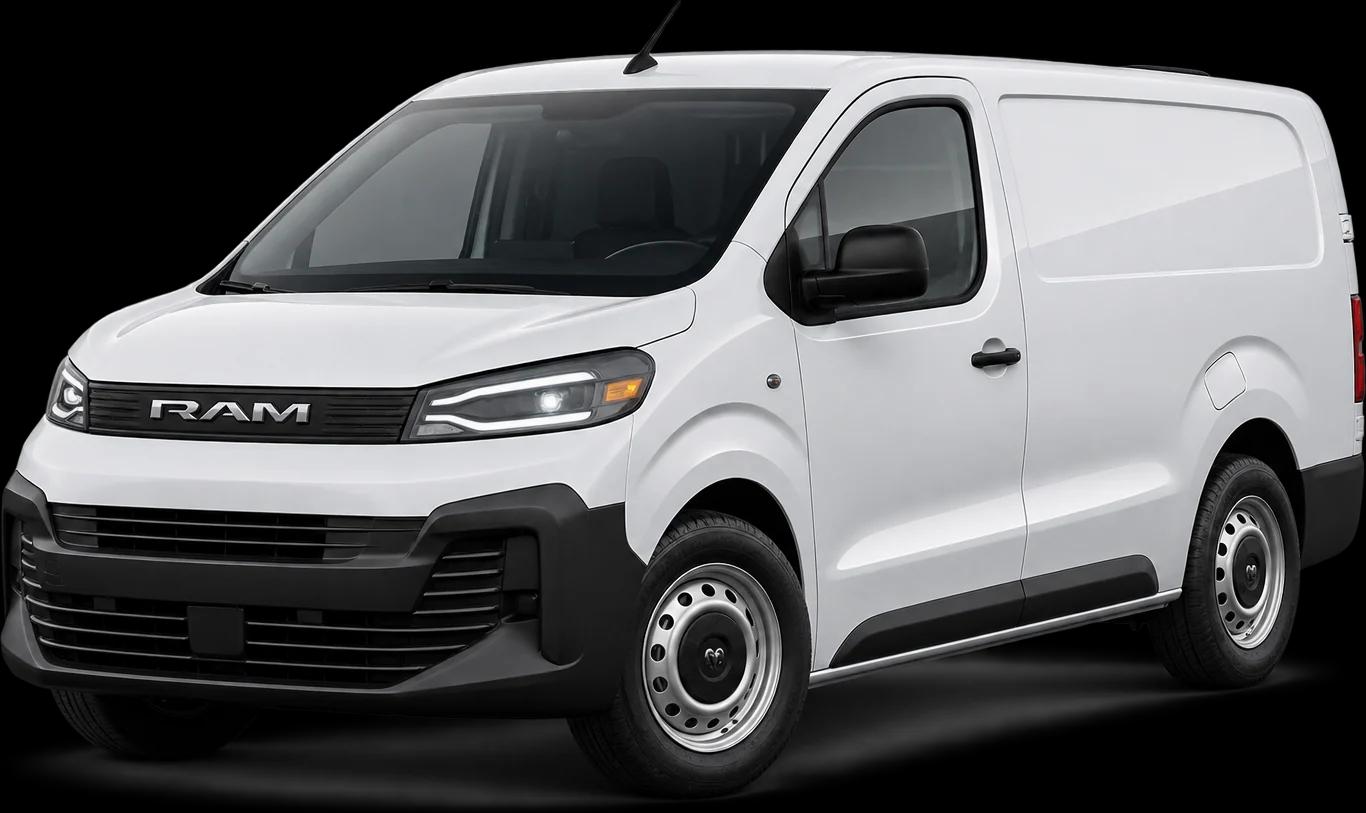
The Ram ProMaster is the established full-size van, with three roof heights and several wheelbases. The Ram ProMaster City is a smaller, all-new model that Ram says reaches dealers in the first quarter of 2027. The ProMaster figures here come from the 2026 model-year listing, the newest Ram has published. The ProMaster City figures come from a preliminary 2027 sheet, and Ram labels its payload and towing numbers as targets.
The short version
If your work involves tall equipment, long stock, shelving racks or two people plus tools, the ProMaster is the van. If you mostly carry tools, parts, samples or packages around town and your worst problem is a tight parking garage, the City deserves a look. Everything else is detail.
Side by side
| ProMaster | ProMaster City | |
|---|---|---|
| Starting MSRP* | $44,105 (Tradesman cutaway); $46,370 (Tradesman cargo van) | $37,400 (Tradesman Cargo) |
| Engine | 3.6L V6, 276 hp, 250 lb-ft | 1.6L turbo four, 166 hp, 221 lb-ft |
| Transmission | 9-speed automatic | 8-speed automatic |
| Drive | Front-wheel drive | Front-wheel drive |
| Wheelbase | 118, 136 or 159 in (plus a 159 in extended frame) | 129 in |
| Max cargo volume | Up to 524 cu ft | Over 167 cu ft |
| Payload | Up to 4,750 lbs | 2,200 lbs (targeted) |
| Towing | Up to 7,130 lbs | About 2,000 lbs (targeted, optional Class 3 hitch) |
| Fuel tank | Not listed in the published specs | 18.5 gal |
| Built in | Saltillo, Mexico | Bursa, Turkey |
*Manufacturer-published starting MSRP excluding destination. The ProMaster price is as of November 2026 and the ProMaster City price is as of August 2026. Option prices are manufacturer-published MSRP for the 2026 ProMaster. The ProMaster maximums apply to different configurations: the towing figure belongs to the 118-inch-wheelbase 1500 cargo van and the payload figure to the 3500 on the 136-inch low roof.
Read the cargo row twice. The big van holds roughly three times the volume at its maximum, and its roof is one of three heights. The smaller van has a 111-inch load floor, a cargo height of 54 inches and a bit more than 48 inches between the rear wheel arches. Measure your longest and widest regular item, such as a pipe length, a display case or a compressor, before you let price decide.
Loads, hitches and the weight you forget
Payload is the figure small-business buyers underestimate. Tools, a ladder rack, shelving, a generator and two employees add up quickly, and the shelving itself is dead weight that comes off the payload number. Ram's published maximum for the ProMaster, 4,750 pounds, belongs to the 3500 cargo van. Lighter-rated models carry less, and the gas cargo vans range from 8,550 to 9,350 pounds of gross weight rating. For the City, 2,200 pounds is a target, not a finished rating.
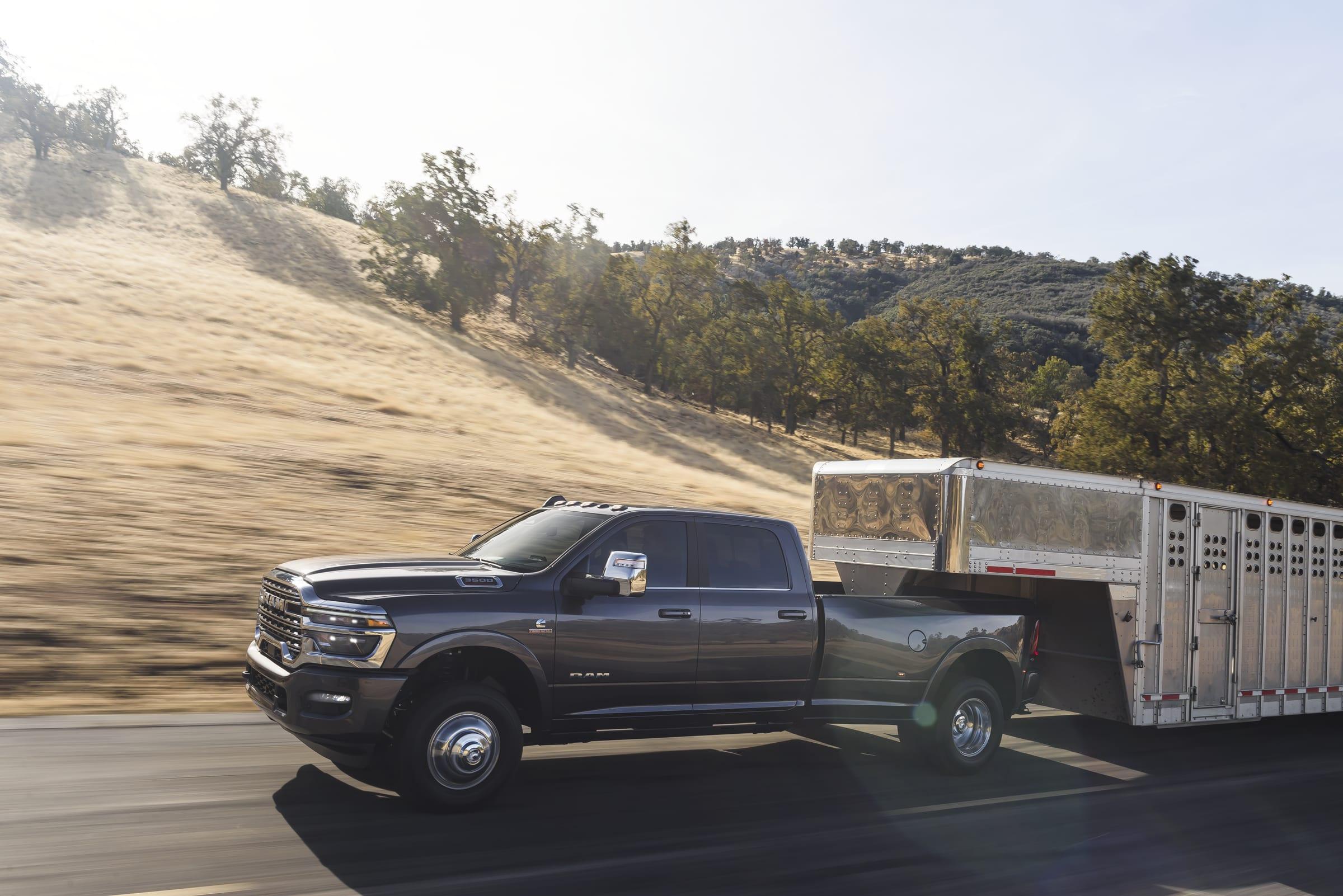
Towing is a side job for either van. The ProMaster's top figure is 7,130 pounds, and the ProMaster cutaway lists up to 7,500 pounds on its 136-inch chassis. The City's roughly 2,000 pounds covers a small utility trailer for a mower or a light equipment trailer, and only with the optional hitch. If towing matters more than cargo volume, a pickup such as the Ram 1500 is a better tool than either van.
Heat is the Southern problem
Published specs cover cab features better than cargo-area conditions, so be careful here. None of the Ram specifications we checked lists a cooled or ventilated cargo area, and a closed van parked in July sun gets very hot inside. If you carry anything heat-sensitive, such as adhesives, paint, food, medicine or electronics, ask the upfitter what cooling or insulation they install and what it does to payload and battery load.
What the factory does offer is electrical headroom. On the ProMaster, the Power Group (Tradesman, $495*) adds a 100-amp battery, a 115-volt outlet, a rear 12-volt outlet and a 220-amp alternator. The Upfitter's Prep Package ($495*, every trim) adds auxiliary switches and an upfitter module for wiring accessories. Those are the pieces an installer needs for fans, extra lighting or a small cooler, so order them with the van instead of trying to retrofit.
On the passenger side, the City Passenger Wagon lists rear climate control and rear reading lamps, and the City's standard equipment includes heated front seats, which matter more in a Santa Fe January than a Louisiana July. The ProMaster's cold-weather content is optional rather than standard.
Wind, wet roads and where front-drive stops
Both vans send power to the front wheels, and neither offers four-wheel drive in the published specs. For paved routes and graded job sites that is fine. A wet, rutted subdivision lot or a sandy yard is another story, so decide in advance where you will park and unload. The ProMaster lists Crosswind Assist among its standard safety features on Tradesman, which is worth knowing if your routes cross open Gulf or Plains highway. A tall, super-high-roof van catches more wind than a low-roof one, whatever the assist system.
Electric and the EV question
Ram's ProMaster spec sheet describes an electric version: a 110 kWh battery, 268 hp, up to 164 miles of combined range and up to 3,170 pounds of payload on the cargo van. It is listed as a 3500 cargo van on the 159-inch wheelbase in high-roof and taller bodies, and the towing chart gives it no trailer rating. We did not find it in the trim list on Ram's configurator, so confirm availability before planning around it. Heat generally reduces range because the air conditioner draws power, and a van that runs routes with a full load sees less range than a spec-sheet number suggests. Plan routes with a generous margin under the stated range, and treat any hot day as a lower-range day.
Prices, trims and options that matter
| ProMaster trim | Cutaway | Cargo van | Window van |
|---|---|---|---|
| Tradesman | $44,105* | $46,370* | $51,730* |
| SLT | $46,600* | $52,060* | n/a |
| SLT+ | $50,395* | $56,060* | $58,725* |
For the City, the Tradesman Cargo is $37,400* and the SLT Cargo is $38,900*. Passenger wagons cost $40,100* and $41,600*.
Start with the cheapest trim and add only what pays you back. A Tradesman ProMaster already has a 7-inch touchscreen, a rear camera, forward collision warning and drowsy-driver detection, and the Safety Group ($1,440* on Tradesman) adds blind-spot detection, a digital rearview mirror and parking sensors. A digital mirror matters in a van, where the rear windows show you only the shelving. The City includes the digital mirror, a 10-inch screen and automatic emergency braking from the Tradesman trim up.
Questions for the dealer and the upfitter
- What is the real payload of this exact van after the shelving and racks you plan to install?
- Does the cargo area get any cooling, insulation or ventilation, and who services it?
- Is the Upfitter's Prep Package on the van, and is the alternator big enough for what you will plug in?
- For the City, when does a unit actually arrive, and what are the final payload and tow ratings?
- Where will it park overnight, and does the roof height clear that garage or gate?
Bottom line
Buy the ProMaster if you load it every day and size matters more than the sticker. Consider the ProMaster City if your loads are modest, your streets are tight and you can wait for the first-quarter arrival and the final ratings. Treat the City's published payload and towing as targets until Ram confirms them, and plan the cargo-area heat problem before you buy, not after the first July.