Buyer guide
Gooseneck and Fifth-Wheel Hauling: Ram 2500, 3500 or Chassis Cab
A practical comparison of the Ram 2500, 3500 and Chassis Cab for horse, livestock and equipment trailers, built around pin weight, combined weight and heat.
By the South CDJR editors · Updated November 4, 2026 · 5 min read
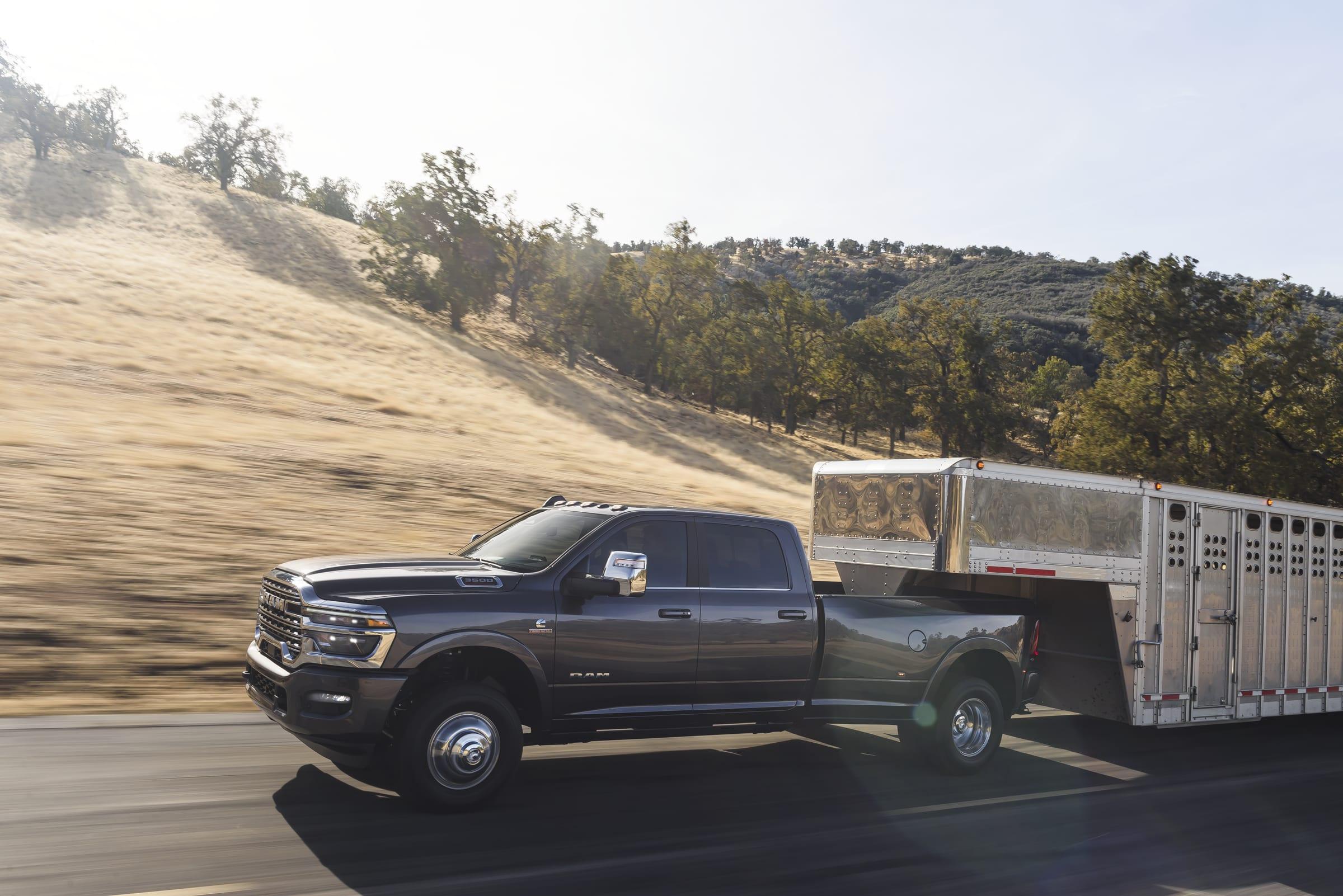
A bumper-pull trailer hangs behind the truck. A gooseneck or fifth-wheel trailer sits over the rear axle, with its front end resting on a hitch in the bed. That changes the engineering. Weight is carried by the truck's frame and rear axle, the trailer typically tracks more steadily, and the truck's payload takes a bigger hit than most buyers expect.
Across the rural South, those trailers carry horses, cattle, goats, hay, skid steers and tractors, often on long hauls to shows, sale barns and job sites. This guide compares the three Ram heavy-duty families that cover that work: the Ram 2500, the Ram 3500 and the Ram Chassis Cab.
Start with the weight on the pin
The tow rating is the headline number, but a gooseneck puts a large share of its weight on the hitch in the bed, and that weight comes out of the truck's payload. Passengers, tack, fuel, feed and the hitch hardware count against payload too. For this reason, a truck can have a 20,000-pound tow rating and still be overloaded by a trailer that is well under it.
We do not state trailer weights, because horse trailers, stock trailers and equipment trailers vary enormously, and loaded weights vary with animals, water, feed and machinery. Get the trailer's loaded weight at a public scale, ask the trailer maker for the pin weight, and compare both with the truck's door-jamb payload sticker and its combined weight rating.
The three families side by side
All figures are for the 2027 model year. Pickup ratings are preliminary as published.
| Ram 2500 | Ram 3500 | Ram Chassis Cab | |
|---|---|---|---|
| Starting MSRP* | $48,040 | $49,340 | $49,170 (3500); $56,420 (4500); $57,620 (5500) |
| Max towing, 6.4L HEMI | 17,740 lbs | 18,140 lbs | 18,880 / 21,240 / 21,230 lbs (3500 / 4500 / 5500) |
| Max towing, Cummins diesel | 20,000 lbs | 37,020 lbs | 25,680 / 29,440 / 34,540 lbs |
| Max payload, HEMI | 4,580 lbs (with $835* package) | 7,580 lbs | 7,710 / 9,390 / 12,370 lbs |
| Max payload, diesel | 3,990 lbs | 6,460 lbs | 6,830 / 8,560 / 11,530 lbs |
| Diesel output | 430 hp, 1,075 lb-ft | 430 hp, 1,075 lb-ft | 360 hp, 800 lb-ft |
| Rear suspension | Five-link coil springs; self-leveling air optional | Two-stage leaf springs; supplemental air optional | Not listed in the published specs |
| Rear wheels | Not listed | Single or dual | Single or dual (3500); dual (4500, 5500) |
| Combined weight rating | Not listed | Not listed | 25,000 to 43,000 lbs depending on model and engine |
*Manufacturer-published starting MSRP excluding destination, as of November 2026. Option prices are Build & Price MSRP.
The chassis-cab diesel is a lower-output engine than the Cummins High-Output offered in the pickups, which is why its torque is 800 lb-ft rather than 1,075. Notice, too, that the pickup 3500's 37,020-pound figure is far higher than the 3500 Chassis Cab's 25,680 pounds. Ram publishes them for different configurations, and the published specs do not explain the gap, so do not shop by that single number. Compare the combined weight rating, payload and the way the vehicle will be built.
Ram 2500: enough for many horse trailers, if you check the payload
The 2500 is the lightest of the three, and its coil-spring rear suspension favors ride comfort over load-carrying. The Payload Upgrade Package ($835*) matters most here. Ram builds the upgraded truck from 3500 hardware, including the frame, leaf springs and an anti-spin rear axle, which gives the 6.4L HEMI truck an 11,040-pound gross rating and up to 4,580 pounds of payload. That figure applies only with the package, so read the sticker on the truck you are actually buying. The Cummins diesel tows more, but its payload tops out lower, at 3,990 pounds.
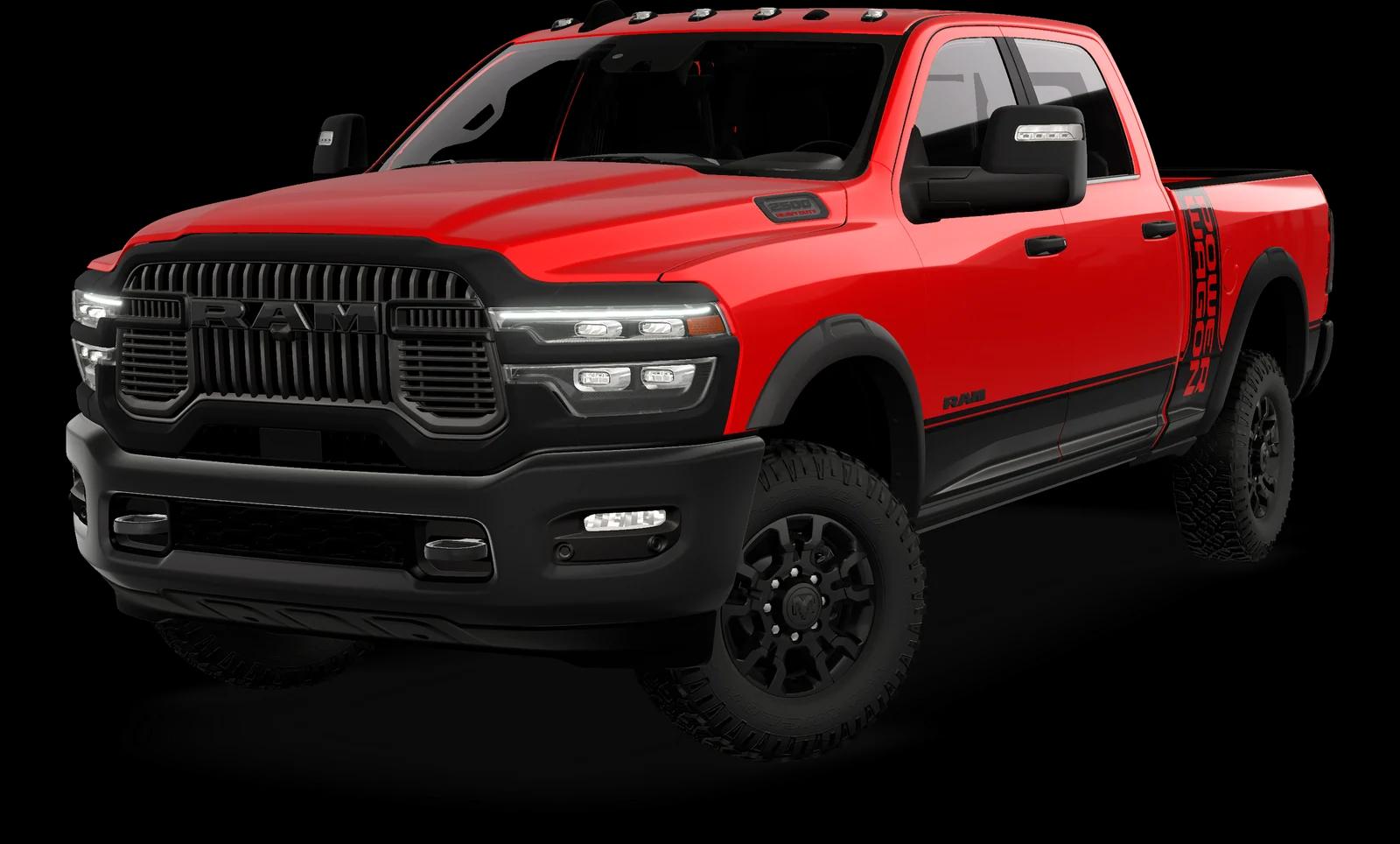
The Power Wagon is the 2500 trim people ask about most, since it can now take the Cummins diesel, and it has optional fifth-wheel or gooseneck preparation. But Ram describes it as nearly 20,000 pounds of towing and almost 3,000 pounds of payload, which is a lot less payload than a work-focused 2500. It is an off-road truck first.
A 2500 is a reasonable match for a lighter two-horse gooseneck, a small stock trailer or a mid-sized equipment trailer, provided the pin weight fits within payload. If you are close to the limit on the first hauling day, you are too close.
Ram 3500: the usual answer for heavier gooseneck work
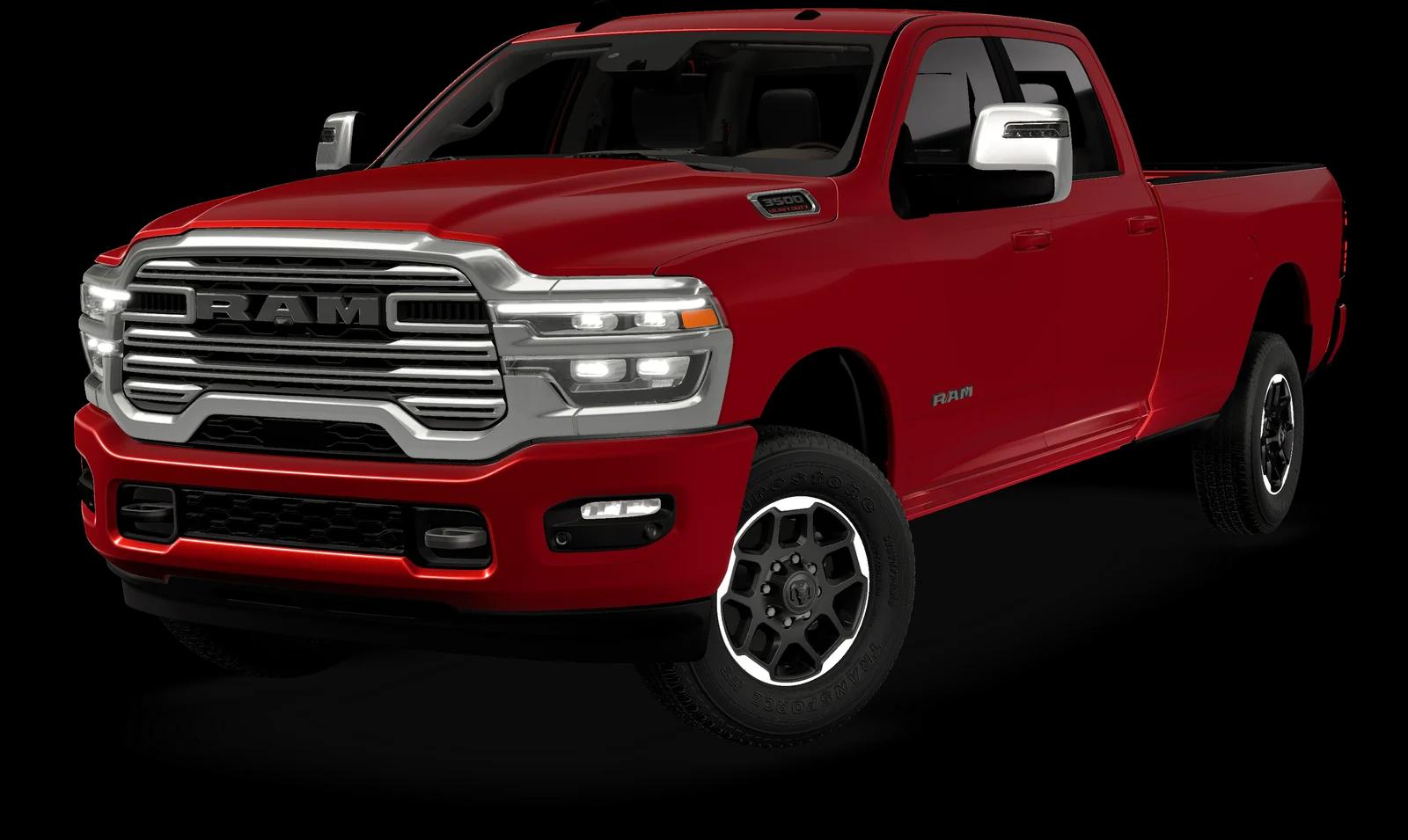
The 3500's two-stage leaf springs ride firmer when empty, but they carry load better. Payload reaches 7,580 pounds with the HEMI and 6,460 pounds with the diesel, and the Max Tow package uses a 12.0-inch rear axle. Dual rear wheels are available, which add stability to a heavy trailer, and an anti-spin rear differential is standard across the line. For 2027, Ram also lifted the gross rating on single-rear-wheel 4x4 HEMI trucks to 11,440 pounds, a gain of roughly 400 pounds of payload.
For a large horse trailer with living quarters, a full-size cattle trailer or a trailer-mounted piece of machinery, this is where most buyers should start. The diesel's torque and its 37,020-pound maximum matter on long grades, and payload matters even more on a trip across a state.
Chassis Cab: when the truck is a business tool
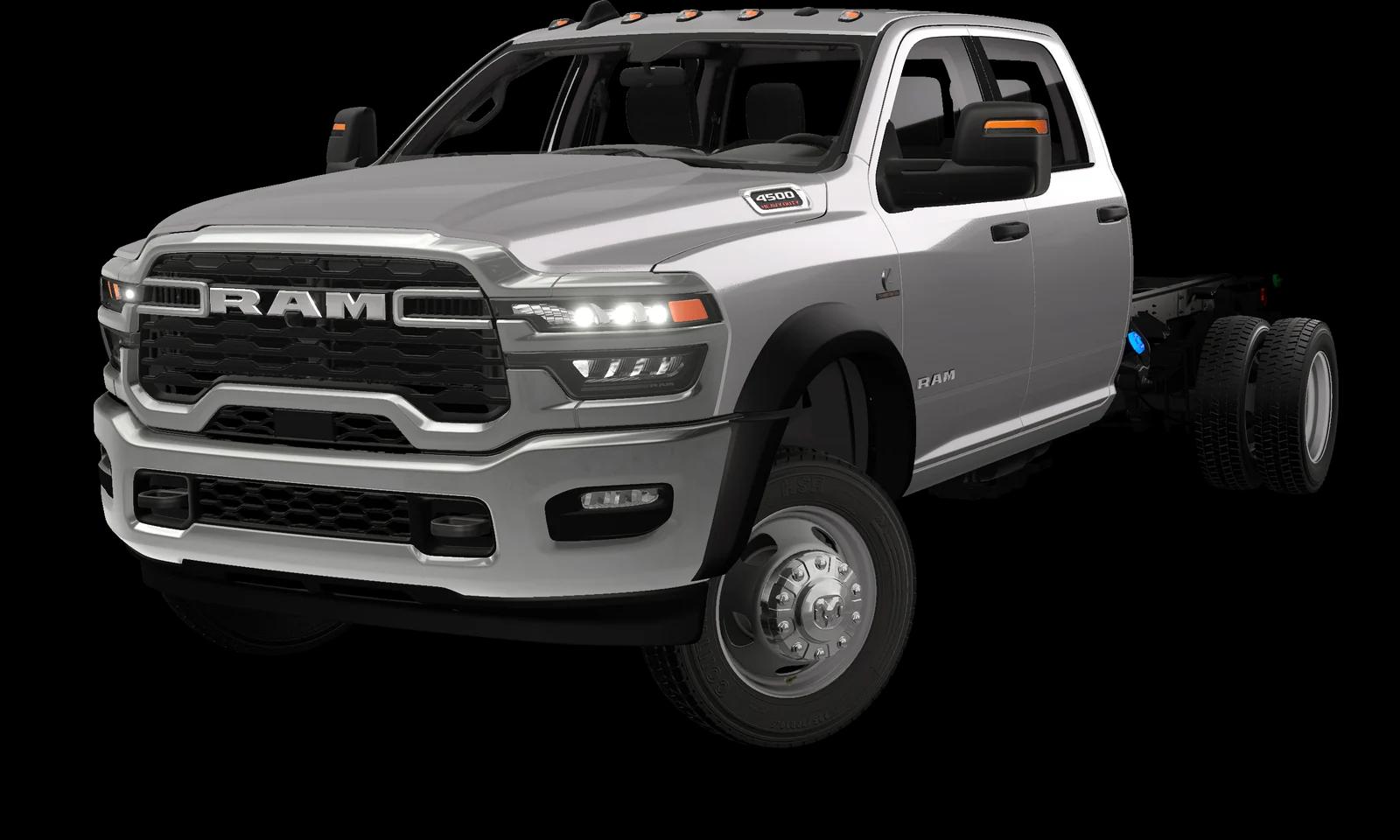
The Chassis Cab is a bare frame behind the cab. A body builder fits a flatbed, hauler body or similar, and the starting price above does not include that body or the hitch. In return you get higher payload and combined weight ratings, at 3500, 4500 and 5500 sizes. The 5500 diesel carries up to 11,530 pounds, tows up to 34,540 pounds and has a published combined rating of 43,000 pounds.
Other features suit commercial use: up to 74 gallons of fuel across two tanks, an optional onboard power system of up to 2.4 kW, and a Payload Upgrade Package ($95*) that raises the gross rating to 19,500 pounds. The diesel costs $9,995* on a chassis cab and $12,495* on a 3500 pickup.
This is the right choice for a cattle operation, hay hauler or equipment dealer that uses a flatbed every day. It is the wrong choice for a family with two horses.
Southern conditions to plan for
- Heat and animals. Livestock and horses are sensitive to heat and rough stops. Plan shaded stops, smooth braking and a trailer with good ventilation.
- Trailer awareness tech. The Ram 2500 and 3500 offer a Towing Technology Group ($1,595* to $2,395* by trim) with a surround-view camera, trailer reverse guidance and trailer tire pressure monitoring. A Tow-Mode Digital Rear-View Mirror Package ($835* to $1,135*) adds a wired tow-mode camera.
- Hitch preparation. Our data lists fifth-wheel or gooseneck prep only for the Power Wagon. For any other truck, ask what hitch hardware is installed, who installs the rest and whether the installer sets the hitch height to your trailer.
Bottom line
Choose the 2500 with the Payload Upgrade Package for light to medium gooseneck trailers and mixed daily use. Choose the 3500, with the diesel and dual rear wheels if needed, for heavy horse trailers, cattle trailers and machinery. Choose a Chassis Cab only if you need a work body and are ready to specify the build. In all three cases, scale your trailer and read the payload sticker before you sign.