Buyer guide
Driving a Jeep Wrangler or Gladiator on Southern Beaches
Sand basics, tire pressure, recovery gear and a salt-air rust routine for Wrangler and Gladiator owners, plus why beach access rules must be checked locally.
By the South CDJR editors · Updated November 4, 2026 · 6 min read
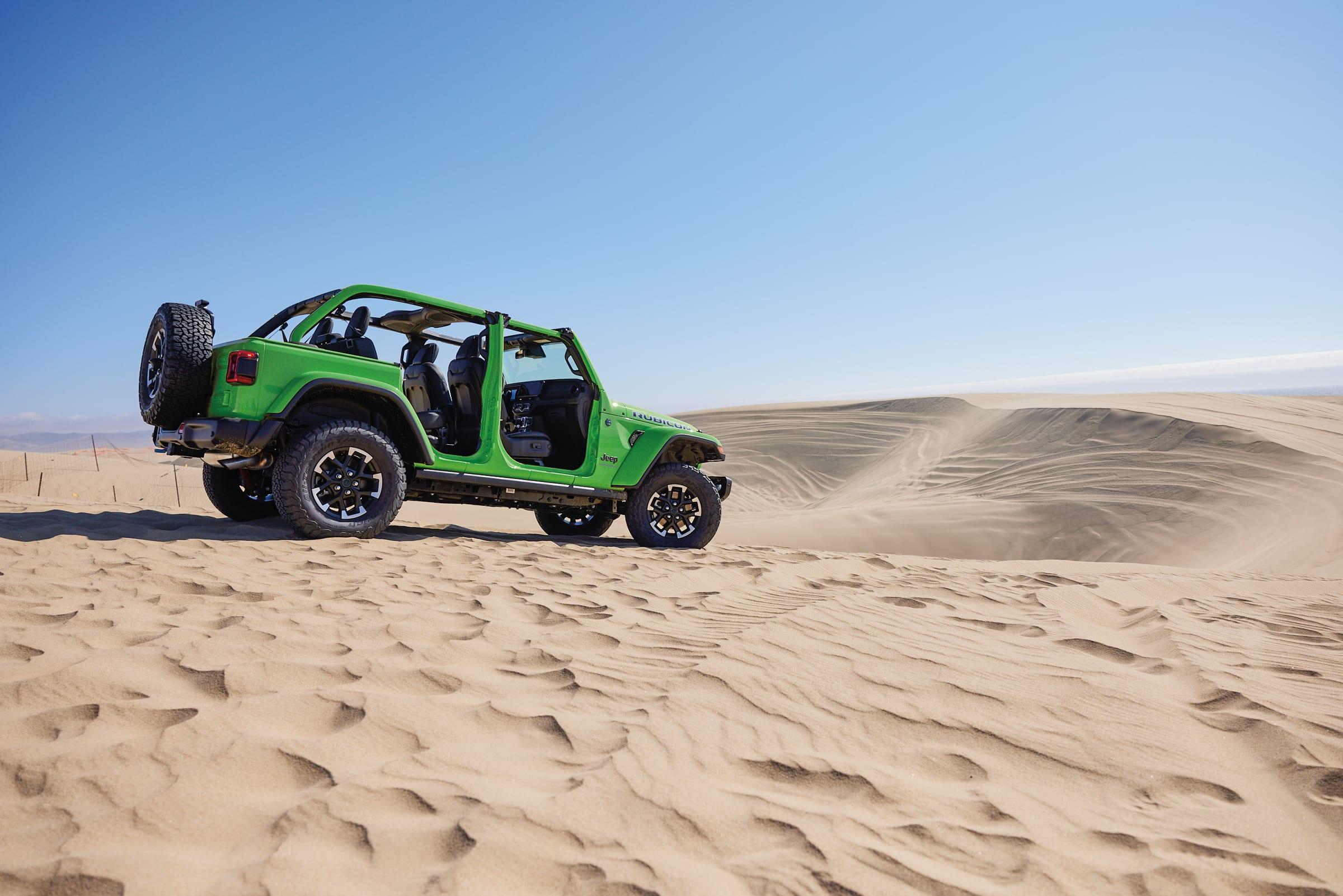
A Jeep on a beach is one of the oldest images in the brand's catalog, and the Gulf and Atlantic coasts give Southern owners plenty of reasons to try it. The reality is more regulated and more corrosive than the photographs suggest. Before the sand, check the rules. After the sand, wash the salt off. Between those two, a few choices about tires and trim make the day easier.
Step one: find out whether you can drive there
Beach access is a patchwork. Some beaches allow vehicles on certain stretches only, some require a permit, some close seasonally for nesting wildlife, and many forbid driving entirely. The rules can differ between neighboring beaches in the same county, and they change. We cannot give you a rulebook, and we will not pretend the list below is complete or current.
A few well-known places have long allowed some beach driving: Cape Hatteras National Seashore in North Carolina, Padre Island National Seashore in Texas, and designated sections of Daytona Beach in Florida. Even at those locations, expect zones, closures, permits or fees, and conditions set by the managing agency. Read the current rules on the official website or call the office before you go, and obey posted signs over anything you read here. A Jeep's capability is not a permit.
What Jeep's own numbers say about sand
Neither the Wrangler nor the Gladiator publishes a "sand rating" in the published specs, so we use the figures that bear on soft ground: weight, clearance, angles, fuel capacity and tires.
| Jeep Wrangler | Jeep Gladiator | |
|---|---|---|
| Curb weight | About 4,003 lbs to 5,283 lbs | 4,695 lbs to 5,069 lbs |
| Ground clearance | 9.7 in (Sport) to 12.9 in (4-door Rubicon, LT315 tires) | 10 in (Sport, Willys) to 12.9 in (35-inch tire package) |
| Approach angle | 41.4 to 47.4 degrees | 40.8 to 46.7 degrees |
| Departure angle | 35.9 to 40.4 degrees | 25 to 26.7 degrees |
| Fuel tank | 17.5 gal (2-door) / 21.5 gal (4-door) | 22 gal |
| Wheelbase | 96.8 in (2-door) / 118.4 in (4-door) | 137.3 in |
Two things stand out. The lightest Wrangler weighs well over 1,000 pounds less than the heaviest, and on soft sand, weight is an enemy because the vehicle tends to sink. And the Gladiator's departure angle is much smaller than the Wrangler's, because its long bed hangs behind the rear axle. Backing off a steep sand ramp, or exiting a beach path with a high lip, will bring the bed's tail closer to the ground.
Fuel matters too. Sand drinks fuel, and the Wrangler's 17.5-gallon two-door tank is the smallest in the group. If you plan a long beach run, carry the right reserve and know where fuel is.
Tires and tire pressure
Soft sand rewards flotation: a bigger contact patch spread over more area, which you get by lowering tire pressure. That is the central beach technique, and it is also where beginners get hurt. We have no sourced pressure targets, so we will not print numbers. The right setting depends on tire construction, load, sand condition and speed. Ask the beach's managing agency, a local Jeep club or a tire dealer for guidance on your specific tire, and respect the tire maker's published minimum.
Some rules of thumb are safe:
- Bring the right tools. A gauge that reads low pressures accurately and a portable compressor to air back up before you reach pavement. Check pressure with a proper gauge, not by eye.
- Drive slower on softer tires. Low pressure and speed are a bad pair, since a sidewall that flexes too much can unseat from the wheel in a hard turn.
- Re-inflate before the highway. A road trip home on beach pressure damages tires and handles badly.
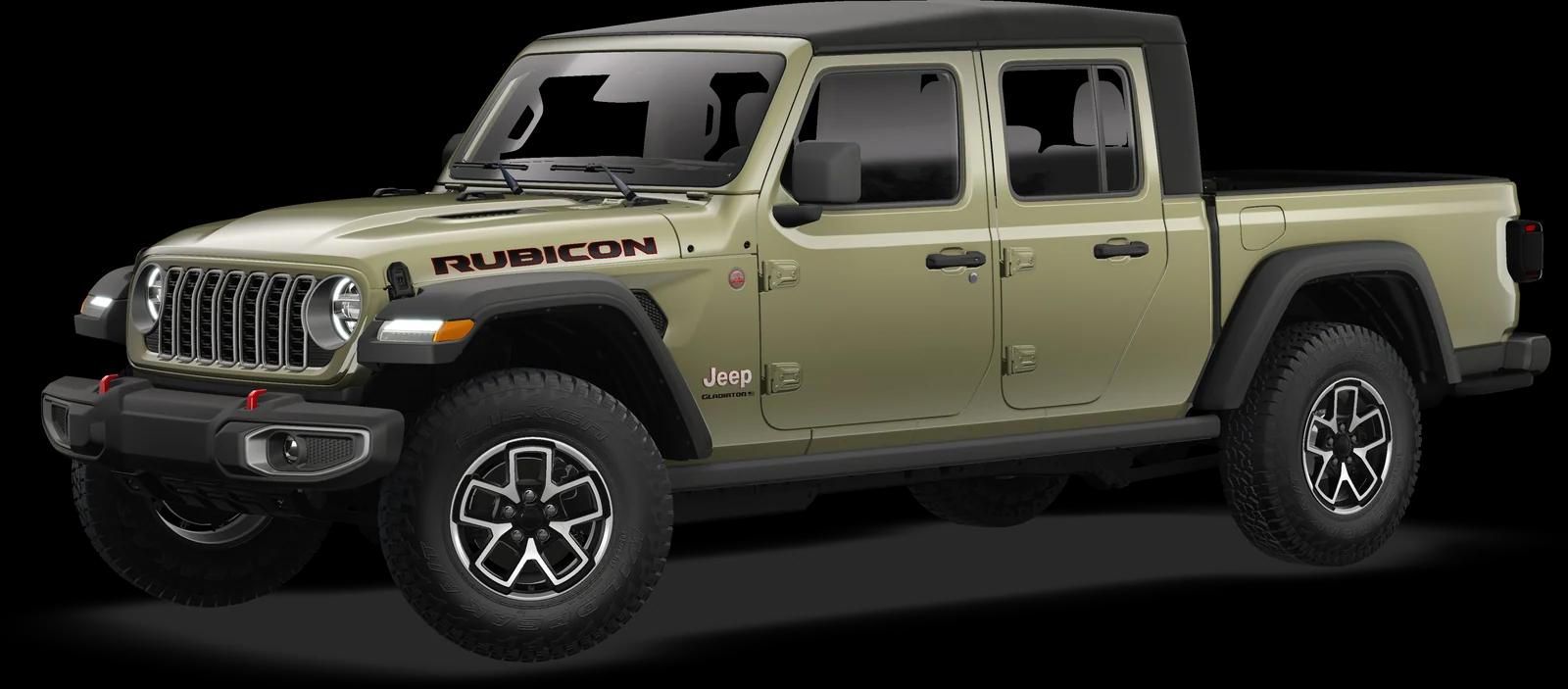
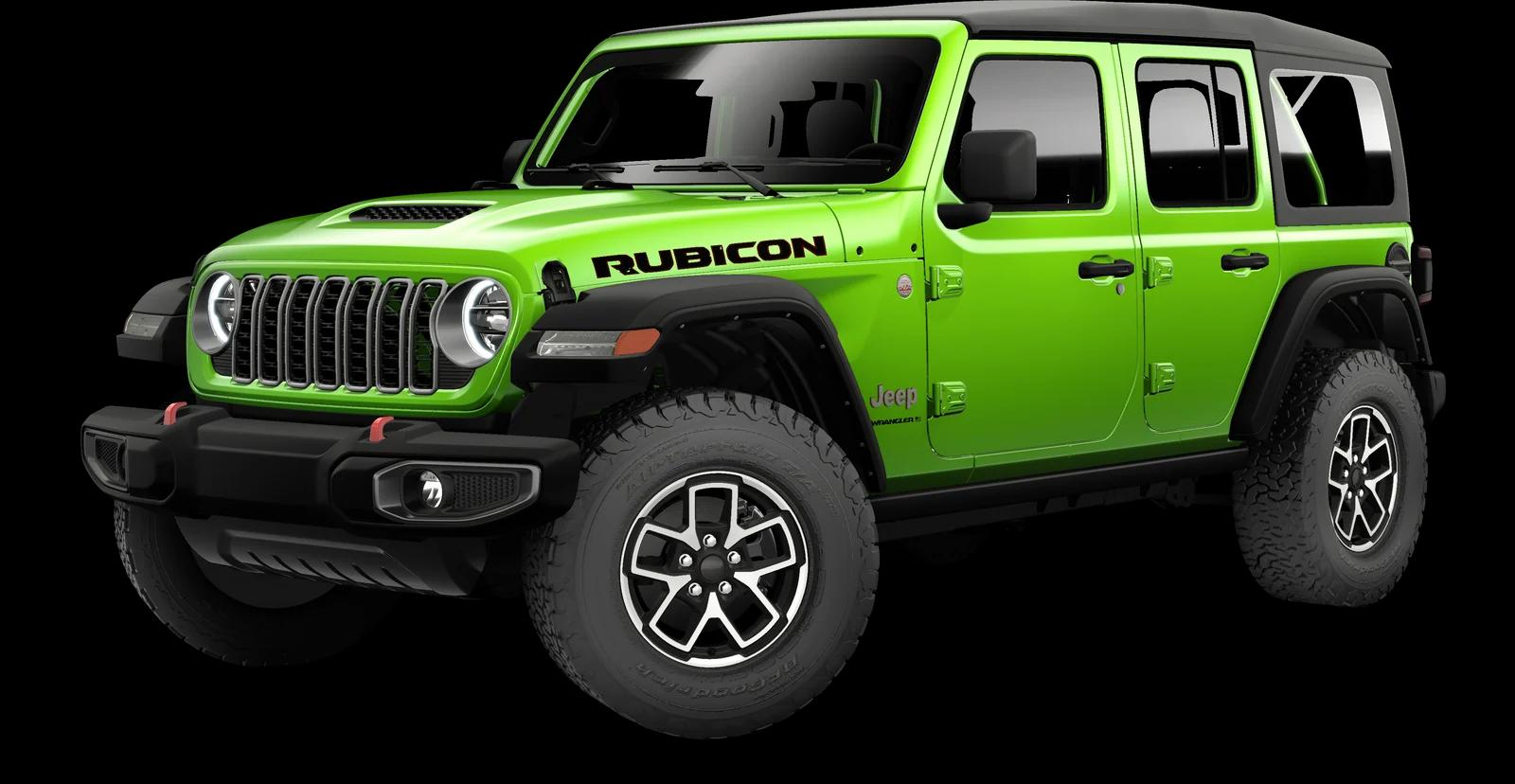
On factory tires, the Wrangler Sport rolls on 32-inch all-season tires, while Willys and Rubicon models come with 33-inch off-road tires. The optional XTREME 35-Inch Tire Package ($2,995*, on Willys, Rubicon and Rewind) adds 35-inch LT315/70R17 tires, a 4.56 rear axle ratio and wheel flare extensions. On the Gladiator, Rubicon and Mojave use 33-inch all-terrain tires. The Sahara lists all-season tires, so if sand is a regular part of your life, price a tire swap before you buy.
Technique, tides and recovery
- Walk it first if the beach is unfamiliar, especially at the entrance, where soft, churned sand collects.
- Keep momentum. Steady throttle, gentle steering and no sudden stops keep a vehicle from digging in.
- Watch the tide table. The most common beach trouble is parking too low and watching water arrive. Park above the high-tide line, and never leave a Jeep where the sand is wet or dark.
- Carry recovery gear. A shovel, traction boards, a tow strap rated for the vehicle's weight, a jack with a base plate and the compressor above. Wrangler Sport trims list two front tow hooks and one rear tow hook, which gives you attachment points. Know where they are before you need them.
- Skid plates earn their keep. The Wrangler Sport lists fuel tank, transmission and transfer case skid plates.
- Winches help but are not a plan. The Gladiator Rubicon Capability Package ($3,495*) adds a winch-capable steel front bumper and a Warn electric front winch, but on a flat beach with no anchor point, a winch has nothing to pull against. Traction boards and lowered tire pressure come first.
Salt-air rust: the routine that matters
Salt does the damage whether the Jeep drives on sand or just lives within a mile of the water. Neither the Wrangler's nor the Gladiator's data makes a corrosion claim, so treat protection as your responsibility.
- Rinse the underside soon after every beach trip. Use fresh water, and aim at the frame, axles, wheel wells, suspension, brake components and hitch. Salt hides in the places you cannot see.
- Wash the body, including door bottoms, hinges and the removable-top hardware, since sand and salt scratch and corrode where parts move.
- Dry and lubricate. Hinges, latches and the tailgate or swing gate benefit from a light lubricant after a wash.
- Inspect regularly. Look at brake lines, fasteners, the receiver hitch, exhaust hangers and the frame for flaking or blistering. Early surface rust is easier to treat than deep rust.
- Consider a protective coating. Ask a local body shop or rust-proofing specialist what works in your area and what it costs. Wax on painted surfaces and a spray coating on the underside are the usual choices. Do not expect a product to substitute for washing.
Which one to buy for the coast
If beach days are a hobby on top of daily driving, a Wrangler Willys ($43,230* in the 2-door) or Rubicon ($47,130* in the 2-door, $51,330* in the 4-door) carries 33-inch tires, while the Sport and Sport S ($36,635* and $39,035* in the 2-door) can do the job at lower cost with a careful driver. A Gladiator is the better fit when you want to carry coolers, chairs and kayaks in a bed. Starting prices are $43,895* for the Sport S, $55,700* for the Rubicon and $56,200* for the Mojave.
Bottom line
A Wrangler or Gladiator is a capable vehicle on soft sand, but permission and preparation decide whether the day goes well. Confirm the rules for the exact beach, learn the tire-pressure approach from a local source, carry recovery gear and wash the salt off every time. The rust bill is the part of coastal Jeep ownership that nobody puts in the photograph.
*Manufacturer-published starting MSRP excluding destination, as of November 2026. Option and package prices are Build & Price MSRP.